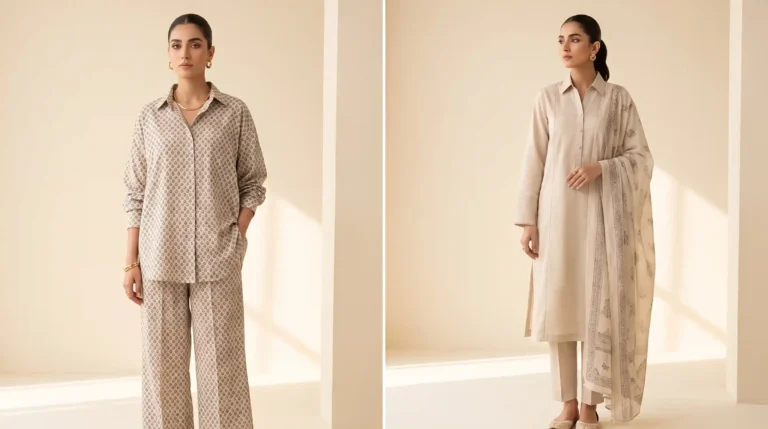
When summer arrives in Pakistan, lawn usually takes centre stage. It is lightweight, breathable and deeply connected with the country’s summer fashion culture.
But lawn is not the only cotton fabric suitable for warm weather.
Cotton cambric offers a different combination of comfort, structure, smoothness and opacity. For women who prefer ready-to-wear clothing that feels comfortable but still holds its shape, the difference can be important.
So, how does cambric compare with lawn? Is 100% cotton cambric suitable for Pakistani summers? And how should you care for cotton cambric clothes? This post tells you all you need to know on cambric vs lawn.
Let’s take a closer look.
What Is Cotton Cambric?
Cambric is a finely woven plain-weave fabric. Traditionally, cambric was made from linen, but the term is now commonly associated with cotton fabric.
Cotton cambric is known for its smooth surface, fine weave and slightly more structured feel compared with very lightweight cotton fabrics. The fabric can also have a subtle smooth finish created through finishing processes such as calendering.
For everyday clothing, these characteristics can make cambric particularly useful for shirts, trousers, kurtas and coordinated two-piece outfits.
The important detail, however, is the fibre content.
Cambric describes the fabric, while 100% cotton describes what the fabric is made from.
That distinction matters when you are shopping for comfortable everyday clothing.
What Is Cotton Lawn?
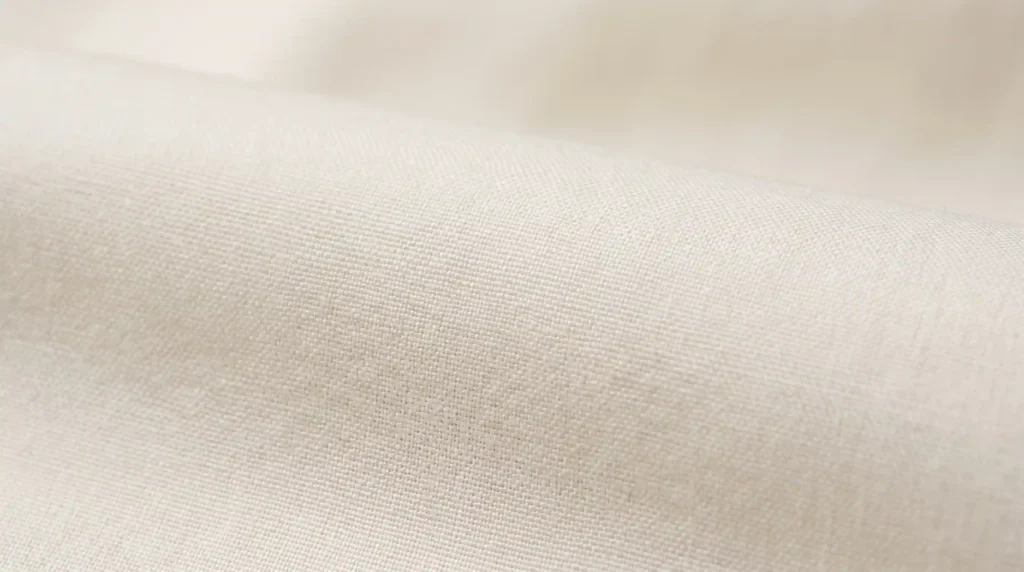
Lawn is another fine, plain-weave cotton fabric that is widely associated with summer clothing in Pakistan.
Its lightweight construction gives it an airy feel and makes it particularly popular during hot weather. Sapphire’s fabric glossary describes lawn as an extremely lightweight summer fabric made from 100% cotton, with breathability, softness and moisture absorbency among its key characteristics.
Lawn is especially popular for printed summer suits because its lightweight surface works well with colorful seasonal prints.
However, very lightweight lawn can also be more sheer than denser cotton fabrics, particularly in lighter colours.
Cambric Vs Lawn At A Glance
| Feature | 100% Cotton Cambric | Cotton Lawn |
|---|---|---|
| Fabric weight | Light to medium | Very light |
| Feel | Smooth and slightly structured | Soft and airy |
| Weave | Fine, dense plain weave | Fine plain weave |
| Breathability | Good | Excellent |
| Opacity | Generally higher | Can be more sheer |
| Structure | Holds shape well | Softer drape |
| Summer suitability | Good, depending on weight and design | Excellent for peak summer |
| Best suited to | Ready-to-wear, shirts, trousers and structured silhouettes | Lightweight summer suits and airy silhouettes |
The table is a general guide because fabric weight, yarn quality, finishing and garment construction can vary considerably.
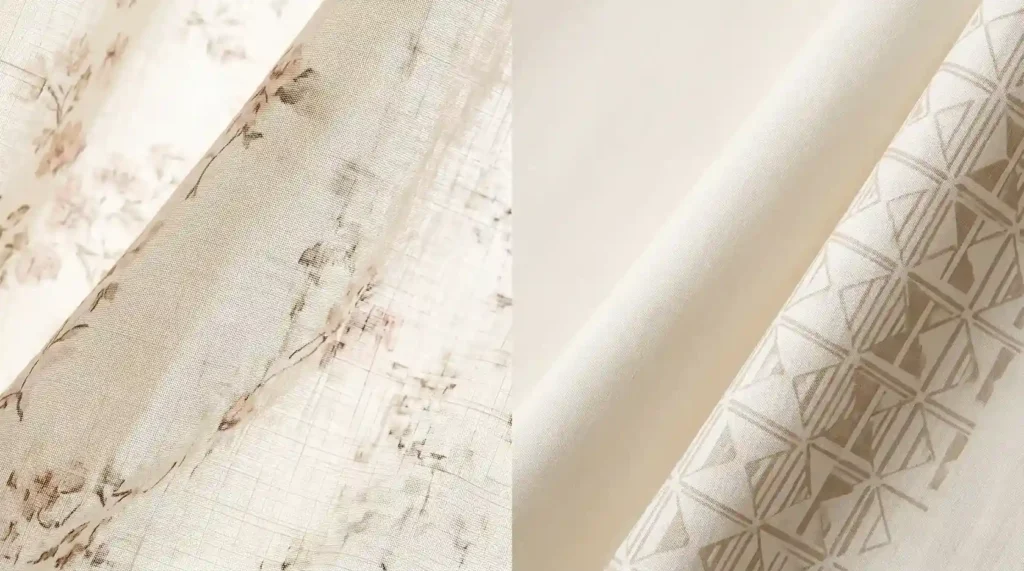
Which Is Cooler: Cambric Or Lawn?
If the only question is which fabric feels cooler in extreme summer heat, lightweight lawn generally has the advantage.
Its lighter construction allows it to feel particularly airy against the skin. This is one reason lawn has become such a dominant summer fabric in Pakistan.
Cambric has a denser construction, so it can feel slightly more substantial.
But cooler is not the only consideration when choosing clothing.
A fabric’s weight, colour, fit, garment construction and the environment all affect how comfortable an outfit feels.
A loose-fitting 100% cotton cambric shirt can still be a comfortable choice for everyday warm-weather dressing, particularly when you prefer a little more structure and coverage than very lightweight lawn provides.
Is 100% Cotton Cambric Good For Pakistani Summers?
Yes, 100% cotton cambric can be a good choice for Pakistani summers, particularly for everyday ready-to-wear clothing.
However, it is important to be specific.
For the hottest days and very humid conditions, lightweight lawn may feel airier.
For everyday clothing where you want a balance between cotton comfort, structure, coverage and a polished appearance, 100% cotton cambric can be a practical alternative.
This is especially relevant for cities such as Karachi, where summer combines high temperatures with periods of considerable humidity.
The construction of the particular cambric matters too. A lighter-weight cambric will naturally feel different from a heavier winter-weight cotton fabric.
This is why simply seeing the word “cambric” on a label does not tell you everything about how a garment will feel.
Why 100% Cotton Matters?
The words “100% cotton” tell you that the fabric is made entirely from cotton fibre rather than a cotton-synthetic blend.
Cotton is naturally absorbent and breathable, which are useful characteristics for warm-weather clothing. Gul Ahmed’s recent cotton guide similarly highlights cotton’s breathability and moisture absorption as important reasons for its suitability in Pakistani weather.
But fibre content is only one part of fabric performance.
Two fabrics can both be 100% cotton and still feel completely different because of differences in:
That is why “100% cotton” should be considered a useful starting point rather than a complete measure of fabric quality.
Why RAWA Uses 100% Cotton Cambric?
At RAWA, we chose 100% cotton cambric because our clothes are designed around everyday wear.
We want our two-piece suits to feel easy to wear while maintaining a clean and polished appearance.
Cotton gives the fabric its natural, breathable character, while the structure of cambric gives our shirts and trousers a more defined appearance.
It also provides a versatile base for the expressive prints that form an important part of the RAWA aesthetic.
For us, the goal is simple:
Comfort should not mean compromising on style.
And everyday clothing should not have to look ordinary.
Cambric For Karachi’s Summer
Karachi presents a particular challenge when choosing summer clothing.
The combination of heat, humidity and long days means that fabric comfort matters just as much as appearance.
For this environment, look beyond the fabric name and consider the complete garment.
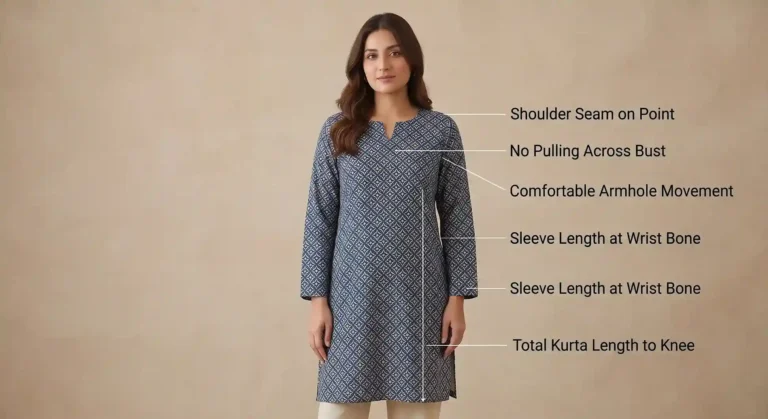
A comfortable summer outfit should ideally have:
This is also where ready-to-wear design becomes important.
A well-designed two-piece cotton outfit can feel very different from a tightly fitted or heavily layered garment made from the same fabric.
How To Care For Cotton Cambric Clothes?
Good fabric deserves good care.
Cotton can shrink and wrinkle, while washing and drying can also affect colour and appearance. General cotton-care guidance recommends following the garment label, using appropriate washing temperatures and taking care with drying to minimise shrinkage and wrinkles.
For printed cotton cambric clothing, a gentle routine is a good starting point.
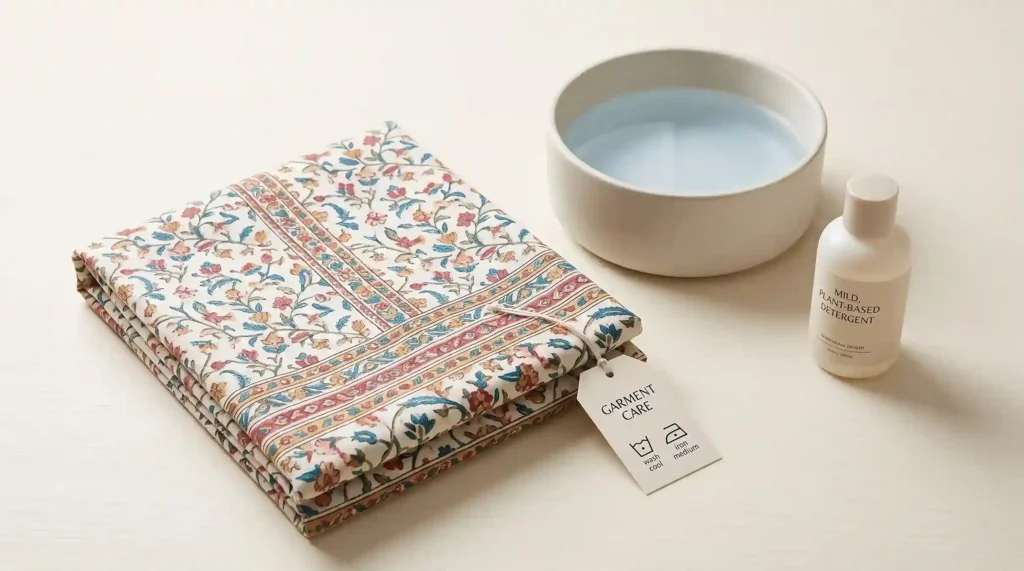
Wash In Cool Or Cold Water
Use cool or cold water whenever the care label allows it.
Hot water can contribute to shrinkage and can be harder on dyed or printed fabrics.
For particularly vibrant printed garments, a gentle wash is preferable.
Use A Mild Detergent
Choose a gentle detergent and avoid unnecessarily aggressive washing products.
There is usually no need to use harsh chemicals simply because a garment is made from cotton.
Turn Printed Clothes Inside Out
Turning a printed garment inside out before washing reduces direct abrasion on the visible surface.
This simple habit can help protect the appearance of prints over repeated washes.
Avoid Bleach Unless The Care Label Allows It
Bleach can affect dyes and prints.
For colourful cotton cambric clothing, it is safer to avoid bleach unless the garment’s care instructions specifically recommend it.
Dry In The Shade
Air drying is a simple way to care for cotton clothing.
For printed garments, drying away from strong direct sunlight can help reduce unnecessary exposure that may contribute to colour fading.
Cotton industry research also identifies cold washing and line drying as useful approaches for reducing the energy associated with laundering.
Iron At A Moderate Temperature
Cotton can wrinkle naturally, so ironing is often part of its care.
Use the temperature recommended on the garment label. If possible, ironing while the garment is slightly damp can make removing wrinkles easier.
Avoid applying excessive heat directly to printed areas.
Store Clean And Completely Dry
Before storing cotton cambric clothing, make sure the garment is completely dry.
Fold garments neatly and store them somewhere clean and dry.
Avoid leaving damp clothing folded for extended periods.
Learn more about RAWA’s fabric and care.
How To Keep Printed Cambric Looking Fresh
RAWA prints are an important part of our design language, so maintaining the appearance of printed cotton matters.
A few simple habits can make a difference:
Wash less aggressively.
A gentle wash is usually better than repeatedly using strong cycles.
Avoid unnecessary heat.
High temperatures can contribute to shrinkage and can be harder on some colours and finishes.
Protect prints from excessive abrasion.
Turning garments inside out before washing is an easy precaution.
Do not leave wet clothes sitting in the washing machine.
Remove them after the wash cycle and dry them promptly.
Follow the care label.
The garment’s specific fabric, dye, print and finishing determine the most appropriate care instructions.
Does Cotton Cambric Shrink?
Cotton can shrink, particularly when exposed to high temperatures during washing or drying.
The amount of shrinkage depends on factors such as fabric construction, finishing and whether the fabric has already been pre-shrunk.
This is why following the care instructions is important.
Avoid assuming that every cotton cambric garment will behave exactly the same way.
Does Cambric Fade After Washing?
Any dyed or printed textile can experience some change in colour over time.
How much a garment changes depends on factors including the dye or printing process, colour, fabric quality, washing method and exposure to sunlight.
Gentle washing, appropriate detergent and shade drying can help protect the appearance of printed clothing. Textile quality testing also recognises colourfastness as an important part of garment performance, with laundering and unsuitable products among factors that can affect colour.
Cambric Vs Lawn: Which Should You Choose?
There is no single fabric that is right for every situation.
Choose lightweight lawn when you want an especially airy fabric for the hottest summer conditions.
Choose 100% cotton cambric when you prefer a smoother, slightly more structured fabric with greater coverage and a polished everyday appearance.
For many wardrobes, there is room for both.
The real question is not whether cambric is “better” than lawn.
It is whether the fabric suits how you dress, where you live and how you want your clothes to feel.
Frequently Asked Questions
The RAWA Approach To Everyday Cotton
Lawn may always have a special place in Pakistani summer wardrobes.
But everyday clothing is about more than choosing the lightest possible fabric.
It is about finding the right balance between comfort, structure, coverage, print, fit and ease.
That is why RAWA chose 100% cotton cambric for its ready-to-wear two-piece suits.
Comfortable enough for everyday life. Refined enough to feel special.